
Microplastics Analysis
ISO 16094-2:2025 compliant microplastics analysis with AI-powered identification using the Bruker LUMOS II FT-IR Microscope.
Microplastics in water are no longer an invisible problem. With the introduction of ISO 16094-2:2025, there is finally an international standard for analyzing microplastics in water samples with low solids concentrations, such as drinking water or source water. The Bruker LUMOS II FT-IR microscope, combined with the new OPUS MP-ID function, sets a new benchmark for speed, precision, and ease of use.
Our Solutions
MP-ID: Smart AI for Microplastics Analysis
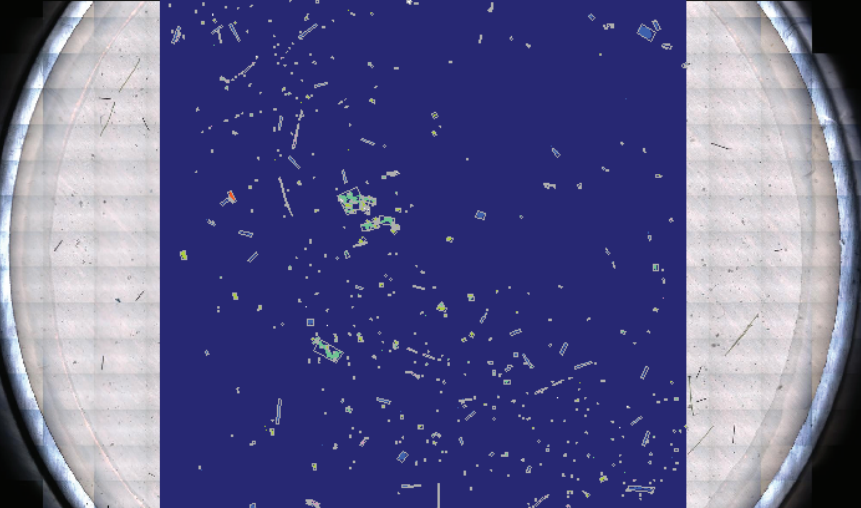
The Microplastic Identifier (MP-ID) in OPUS 9 is a fully integrated software module that automatically processes hyperspectral data and identifies polymers using deep learning.
- Fully automatic recognition of >15 polymer types (PE, PP, PET, PS, PVC, PA, PU, etc.)
- No manual library comparison: MP-ID uses models trained on real LUMOS II data
- Fast and robust analysis, even with contamination or degraded polymers
- Transparent results with classification maps, HIT scores, and statistics
- Designed according to ISO 16094-2, ISO 24187, and EU 2024/1441
A681 Microplastics Sample Holder
The new A681 Microplastics Sample Holder makes analysis faster and more efficient with three-filter workflow capability.
- 3 positions for Ø25 mm filters, ideal for background + 2 samples/duplicates
- Magnetic mounting frames with RFID chip for error-free, fast exchanges
- Suitable for transmission and reflection measurements
- Fully compatible with LUMOS II, HYPERION II, and SENTERRA II microscopes
Complete Imaging & Detection
Full filter imaging ensures no particle is missed with industry-leading speed and resolution.
- Detection of particles down to 5 µm
- Complete filter imaging, no particle is missed
- Up to 500 spectra per second at high resolution
- Supports transmission, ATR, and reflection modes
- Resistant to matrix noise, even with complex environmental samples
Compliance & Standards
Water quality, Analysis of microplastics in drinking water and groundwater, Infrared spectroscopy method
Principles for the analysis of microplastics present in the environment
European regulation on microplastics in drinking water
Recommended Products
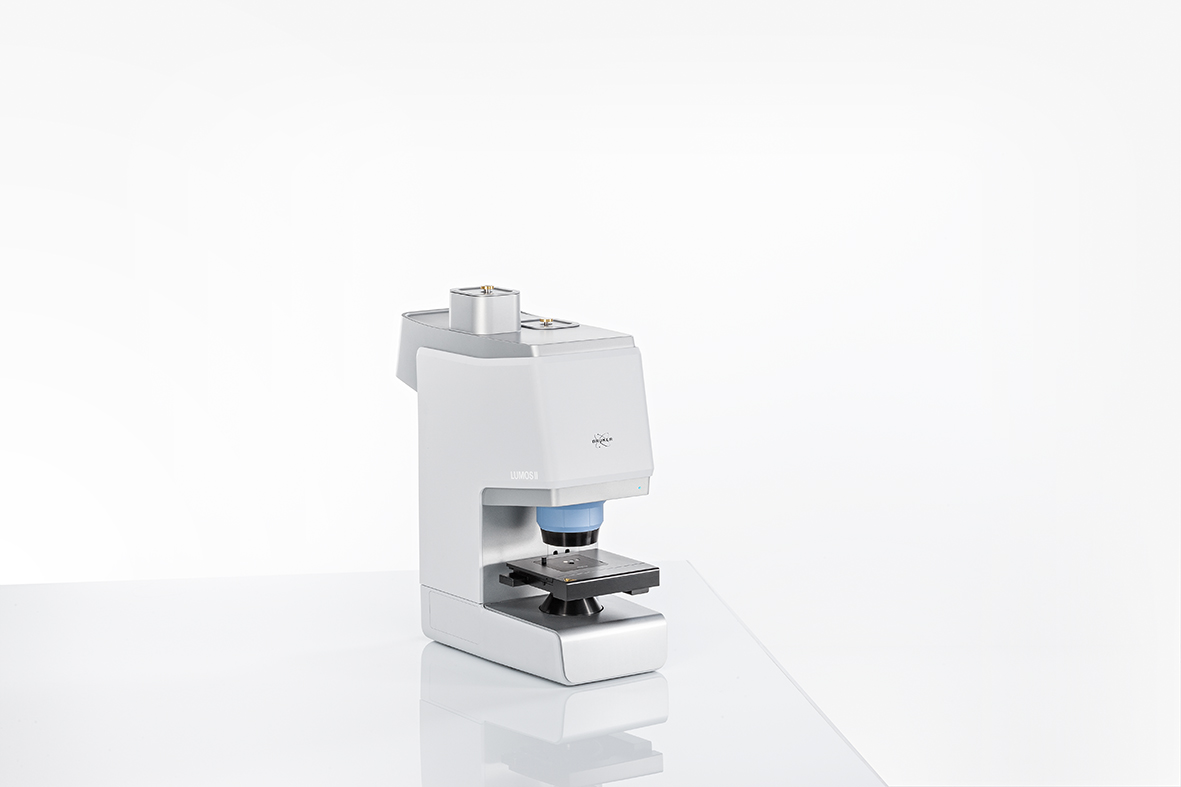
LUMOS II FT-IR Microscope
The LUMOS II is a stand-alone, fully automated FT-IR microscope designed to provide exceptional chemical imaging performance and ease of use for both novice and expert researchers.
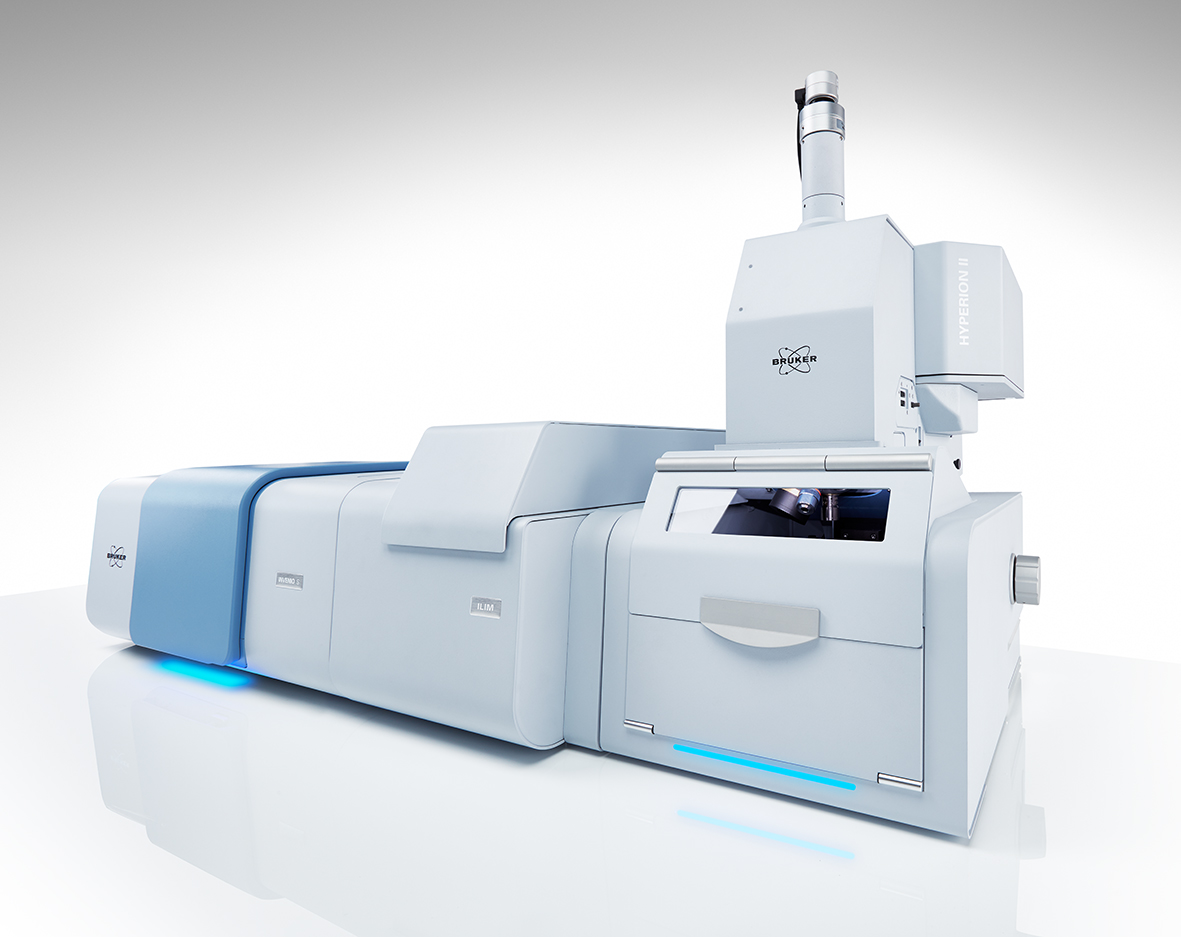
HYPERION II FT-IR & QCL Microscope
The HYPERION II is a premier research-grade microscope that uniquely integrates traditional FT-IR with high-speed QCL laser technology for advanced molecular imaging and sub-micron characterization.
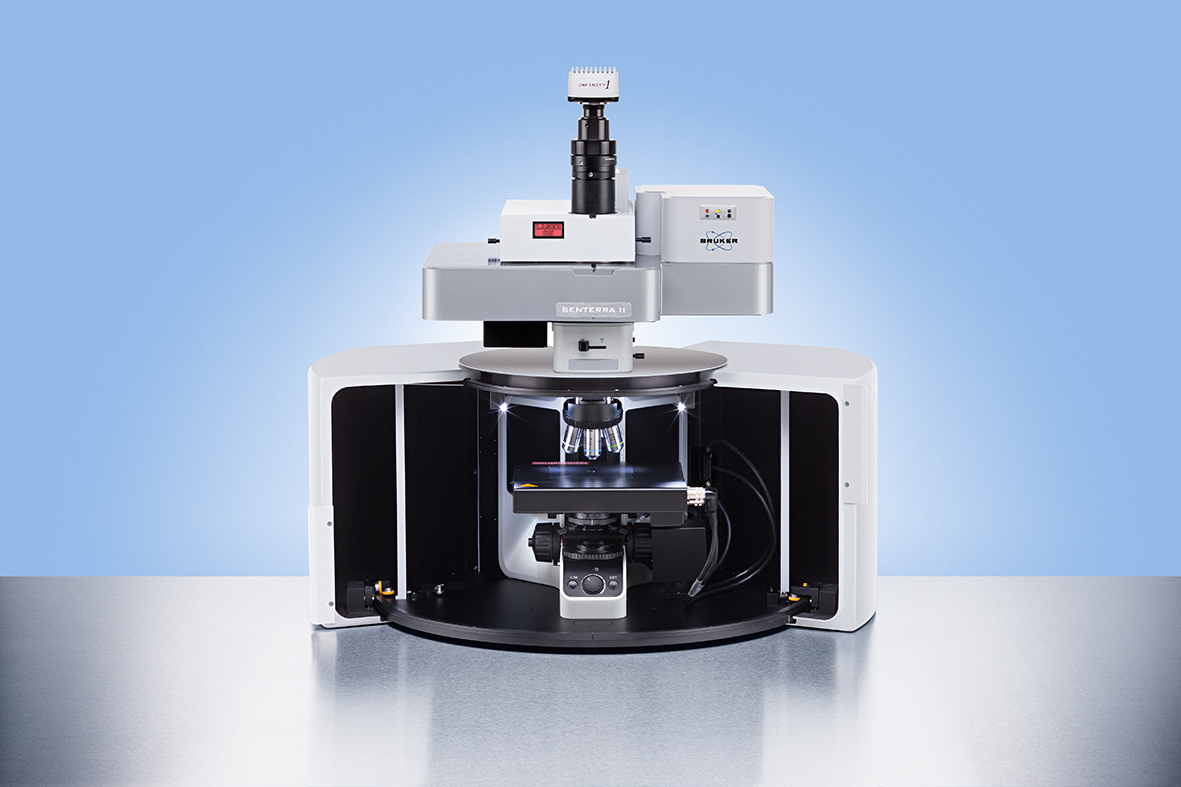
SENTERRA II Raman Microscope
The SENTERRA II is a high-performance confocal Raman microscope designed for fully automated, continuous operation, delivering research-grade sensitivity and sub-wavenumber precision for both laboratory and industrial applications.
Frequently Asked Questions
What is the new ISO 16094-2 standard for microplastics?
ISO 16094-2:2025 specifies the method for analyzing microplastics in water using vibrational spectroscopy (FTIR and Raman). It mandates strict protocols for sampling, filtration, and automated particle identification to ensuring consistent, comparable results across laboratories.
How does the Bruker MP-ID software identify microplastics?
Bruker MP-ID (Microplastic Identifier) uses deep learning models trained on thousands of real-world spectra. Unlike traditional library searching which can be slow and sensitive to noise, MP-ID instantly classifies particles (e.g., PE, PP, PS) even if they are weathered or have pigment interference, providing a simple 'One-Click' result.
Can I measure microplastics down to 5 microns?
Yes. With the Bruker LUMOS II FTIR microscope and high-performance FPA detectors, you can image complete filters and detect particles as small as 5 µm with high spectral quality.